Book Now
+62 858-4738-7686Story
The Island Where Deer Swim Across the Sea

In impossibly blue water off the coast of Java sit tiny Tabuhan and wild Menjangan, both home to secrets that may surprise you.
An Island Named After Deer
Imagine approaching a small island by boat, its pale beaches framed by dry forest and perfectly clear water.
Then, somewhere along the shoreline, you spot something unexpected.
A deer.
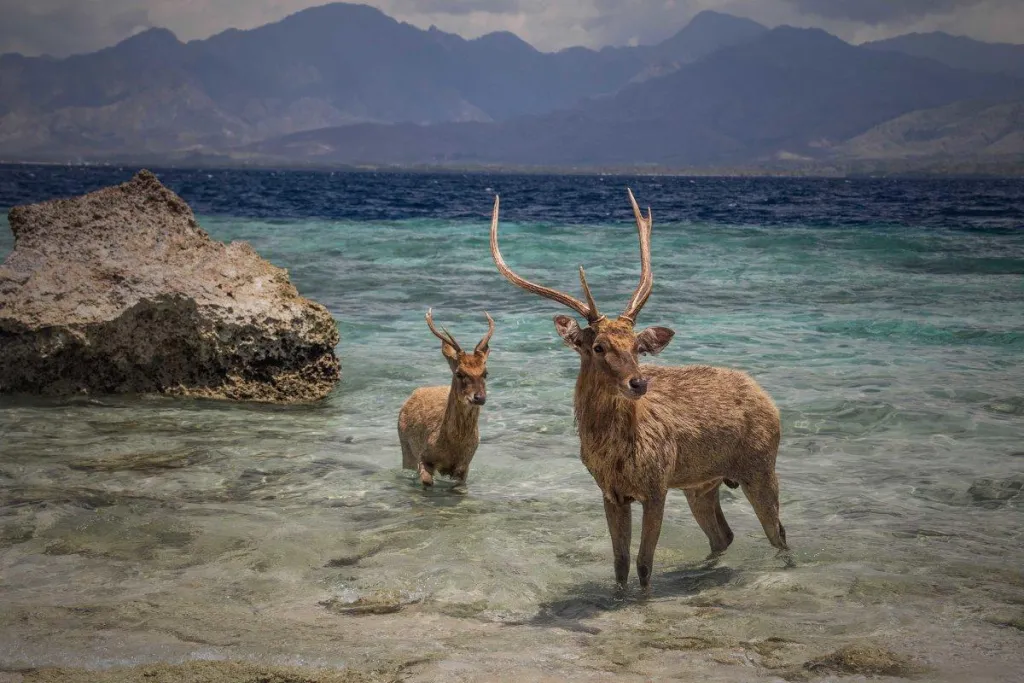
Not an animal you would normally associate with a tropical island surrounded by coral reefs, but a wild deer standing at the edge of the sea.
Welcome to Menjangan.
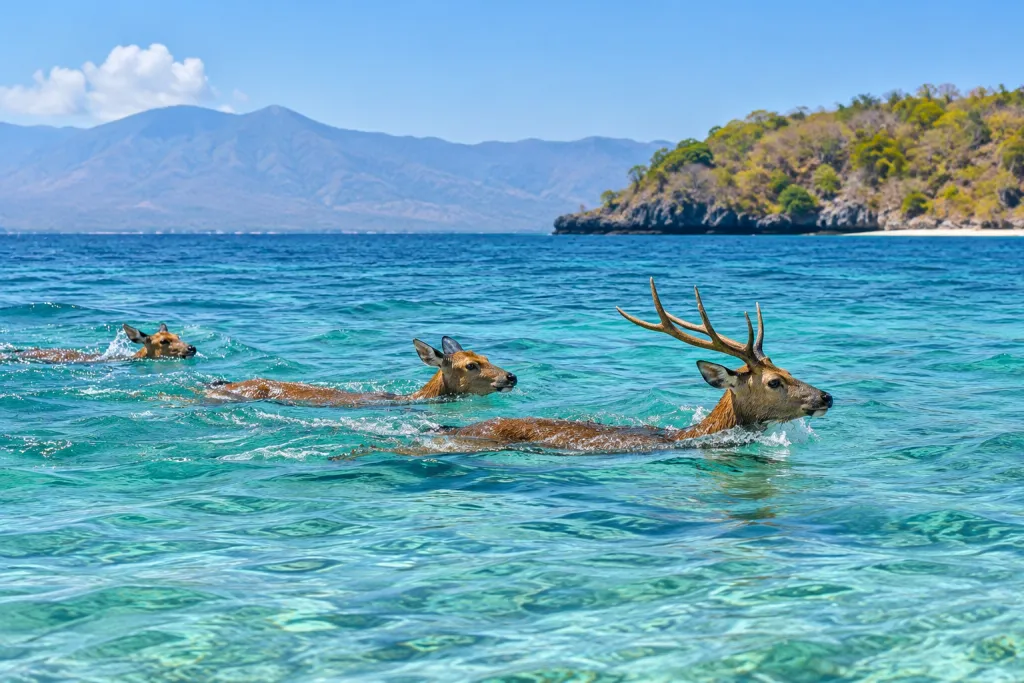
Its name means Deer Island, and according to local accounts, the name comes from the wild deer that were observed swimming across from Bali’s mainland.
It is a remarkable image: deer entering the water, swimming through the strait, and eventually reaching the island’s shores.
Today, Menjangan forms part of West Bali National Park, a protected landscape where wildlife thrives in the meeting place between forest and sea.
And although most visitors come for the abundant life beneath the water, keep a watchful eye out for the deer that still call this island home.
The Island That Sings
A short distance away, in the waters off Banyuwangi, lies another island with an equally unusual story.
Tabuhan.
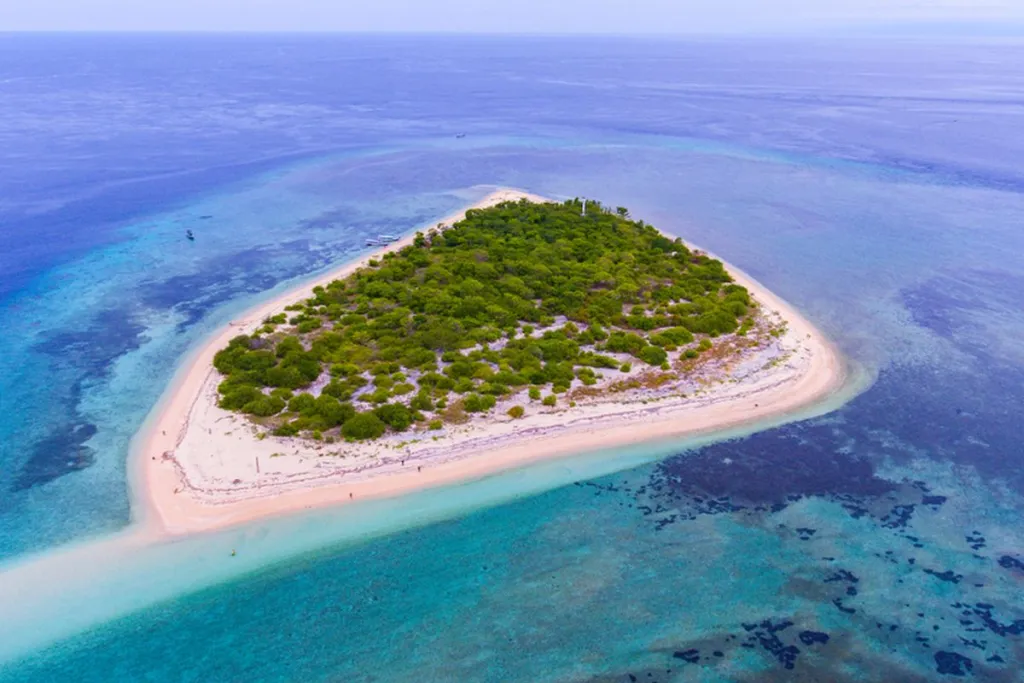
At first glance, it looks like a picture of tropical perfection: a small stretch of white sand, a scattering of trees, and turquoise water fading into deeper blue.
But its name tells a different story.
Long before Tabuhan became a destination for visitors, fishermen from the nearby village of Bangsring travelled through these waters.
According to local oral tradition, they would hear strange, humming sounds coming from the island. The noise was associated with the strong winds passing through the area.
The name Tabuhan is connected to the idea of beating a drum or musical percussion.
An island named not for its beauty, but for its sound.
Even today, the winds around Tabuhan are powerful enough to attract kitesurfers from around the world. In 2017, athletes from 13 countries gathered here for an international kite and windsurfing event.
A tiny island that once caught the attention of local fishermen had found an entirely new audience.
Secrets in the Sand
Tabuhan has another, less obvious, connection to history.
During the Second World War, the island was reportedly used by Japanese forces as an observation point.
Historical accounts describe the remains of an old lighthouse, a reminder that this peaceful stretch of sand once had a very different purpose.
It is difficult to imagine today.
The same beaches where visitors now walk barefoot were once part of a strategic maritime landscape between Java and Bali.
The boats have changed. The island has become a place of leisure. But its history remains part of the story.
Two Islands, Two Different Worlds
What makes Menjangan and Tabuhan so fascinating is not simply their beauty, but how different they are.
Menjangan belongs to a protected wilderness, where deer roam and the coastline gives way to forests and ancient-looking landscapes.
Tabuhan is smaller, more exposed, and shaped by the winds that sweep through the Bali Strait.
One island is named after the animals that reached its shores.
The other is remembered for the sounds carried across the water.
And between them lies a narrow stretch of sea that has connected fishermen, wildlife, travellers, and coastal communities for generations.
Beyond the Turquoise Water
Most people arrive at Menjangan and Tabuhan expecting beautiful beaches and clear water.
And they certainly find them.
But there is something special about discovering that these islands have stories of their own.
The thought of deer swimming across the sea. The sound of wind that gave an island its name. The traces of history hidden behind a seemingly untouched shoreline.
They are small details, easily missed.
Yet they change the way you see a place.
Because sometimes the most extraordinary thing about an island is the stories it quietly keeps.